What Are Prebiotics and Why Are They Important?
Prebiotics are indigestible compounds—usually certain types of fiber—that serve as food for the beneficial bacteria living in your colon. Unlike probiotics, which are live microorganisms, prebiotics are non-living substances that selectively nourish the good microbes already in your gut.
When gut bacteria ferment these fibers, they produce short-chain fatty acids such as butyrate, acetate, and propionate. These fatty acids play a role in maintaining the health of the intestinal lining, supporting immune function, and creating an environment where beneficial bacteria can thrive.
Sources: CleanEatz Kitchen, AMMD (Amy Myers MD), OmniBiotic Life
Main Types of Prebiotic Fiber
Different prebiotic fibers act through distinct pathways, but they share the common trait of resisting digestion in the upper gastrointestinal tract. The primary types include inulin, fructooligosaccharides (FOS), galactooligosaccharides (GOS), and resistant starch.
Inulin and FOS are found naturally in many plant foods, while GOS can be derived from dairy. Resistant starch is a type of starch that escapes digestion in the small intestine and reaches the colon intact. Each type feeds specific bacterial populations, which is why a varied intake of prebiotic foods is beneficial.
- Inulin: a soluble fiber present in roots and tubers such as Jerusalem artichokes, chicory, and garlic.
- Fructooligosaccharides (FOS): shorter-chain fibers found in bananas, onions, and asparagus.
- Galactooligosaccharides (GOS): chains of galactose that occur naturally in some beans and legumes.
- Resistant starch: found in under-ripe bananas, cooked and cooled potatoes, oats, and legumes.
Sources: CleanEatz Kitchen, OmniBiotic Life
Top Prebiotic Foods to Include in Your Meals
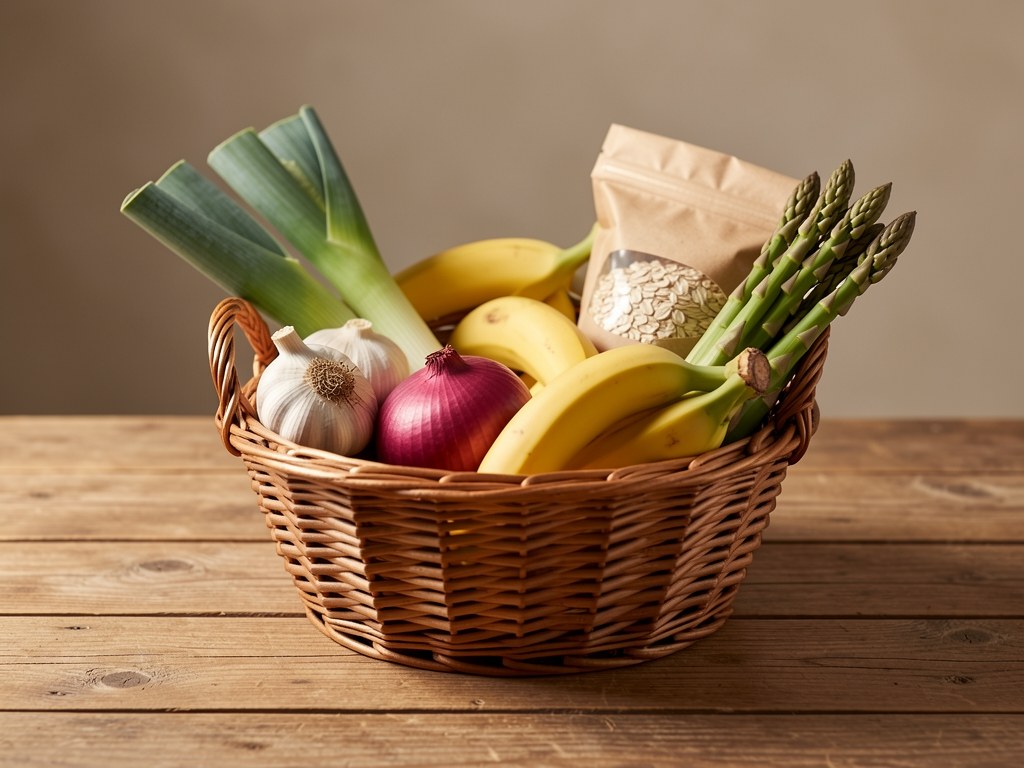
Many everyday plant foods deliver prebiotic fiber, and you don't need specialty products to boost your intake. Rich sources include garlic, onions, leeks, asparagus, bananas (especially less-ripe ones), oats, apples, barley, legumes, and Jerusalem artichokes. Each offers a slightly different mix of prebiotic fibers, so rotating them helps support a diverse microbiome.
To make this practical, think of adding a clove of garlic to roasted vegetables, tossing sliced banana into oatmeal, or blending leeks into soups. These foods can fit seamlessly into familiar dishes without requiring a major overhaul of your eating habits.
- Garlic, onions, and leeks are versatile for flavoring savory dishes.
- Bananas: less-ripe ones are higher in resistant starch; riper ones contain more pectin, another prebiotic fiber.
- Oats and apples offer beta-glucan and pectin, respectively.
- Barley and legumes provide both insoluble fiber and resistant starch.
- Jerusalem artichokes (sunchokes) are especially rich in inulin.
Sources: CleanEatz Kitchen, Flore
How to Increase Fiber Gradually to Avoid Bloating and Gas
Switching from a low-fiber diet to one rich in prebiotics can cause temporary bloating and gas. This happens because the bacteria in your colon begin fermenting the new fiber, producing gas as a byproduct. For most people, these effects subside as the microbiome adjusts.
To minimize discomfort, introduce prebiotic-rich foods slowly over two to three weeks. Start with small portions, such as a quarter of a small onion or a few asparagus spears, and gradually increase the amount. Drinking plenty of water helps the fiber move smoothly through your digestive tract.
- Begin with small portions of one prebiotic food at a time.
- Increase the amount gradually over 2–3 weeks.
- Chew thoroughly to aid digestion.
- Pair high-fiber meals with adequate hydration.
- If you have underlying digestive conditions, consult a healthcare professional before making significant dietary changes.
Sources: CleanEatz Kitchen
Synbiotic Foods: Pairing Prebiotics with Probiotics
Prebiotics are often described as the fuel for probiotics—the live beneficial bacteria found in fermented foods like yogurt, kefir, sauerkraut, and kimchi. Using both together is referred to as a synbiotic approach, and it can create a supportive environment for the microbes to thrive.
A simple way to combine them is to add sliced banana (prebiotic) to a bowl of yogurt (probiotic), or stir a spoonful of garlic-infused sautéed greens into miso soup. The prebiotic fiber provides the energy that helps the probiotics establish and multiply in your gut.
- Top unsweetened yogurt with raw or slightly cooked onion for a savory breakfast.
- Mix oats and grated apple with kefir for a fiber- and probiotic-rich bowl.
- Add roasted asparagus to a side of sauerkraut.
- Blend a less-ripe banana into a smoothie that includes a fermented dairy or plant-based probiotic.
Sources: CleanEatz Kitchen, AMMD (Amy Myers MD)
Prebiotics vs. Fiber: How They Relate
Fiber is a broad category of plant carbohydrates that resist human digestion. Prebiotics are a specific type of fiber (or other compound) that selectively feed beneficial microbes. In other words, all prebiotics are fiber, but not all fiber is prebiotic.
For example, cellulose and lignin are structural fibers that pass through the gut largely unchanged, but they do not have the same selective fermentability as inulin or resistant starch. That selectivity is what distinguishes a prebiotic from a general fiber. When aiming to nourish your gut bacteria, it's helpful to focus on those prebiotic types rather than just increasing total bulk.
Sources: CleanEatz Kitchen, OmniBiotic Life
Frequently asked questions
Can you take prebiotic supplements instead of eating prebiotic foods?
Yes, supplements are available, but they are not a necessary replacement for whole foods. There is no official daily target for prebiotic grams, and food sources deliver the fibers within a matrix of other nutrients that support overall health. If you choose a supplement, the same gradual approach applies to avoid digestive upset.
Sources: CleanEatz KitchenAre prebiotics safe for everyone?
Prebiotics are safe for most people, but some individuals, such as those with irritable bowel syndrome (IBS), may be sensitive to certain types of prebiotic fiber, particularly FODMAPs. If you have a digestive condition, it's wise to introduce prebiotic foods slowly and work with a healthcare professional to identify which types you tolerate best.
Sources: Spirit of Change MagazineDo cooked onions and garlic still provide prebiotic benefits?
Cooking onions and garlic can reduce their prebiotic content slightly, but they still offer meaningful benefits. For example, a cooked onion in a soup or stew retains some inulin and FOS. If you tolerate raw versions, they provide the highest fiber amounts, but cooked forms are a practical way to increase intake without the pungency.
Sources: CleanEatz KitchenWhich foods have the highest prebiotic content?
While specific amounts vary, foods commonly cited as especially rich in prebiotic fiber include garlic, onions, leeks, asparagus, bananas (particularly less-ripe ones), oats, apples, and Jerusalem artichokes. These are among the most concentrated plant sources used in research and practical guides.
Sources: CleanEatz Kitchen, FloreSources
- Best Prebiotic Foods for Gut Health (And How to Eat Them) — CleanEatz Kitchen
- 10 Prebiotic Foods For A Healthy Gut — AMMD (Amy Myers MD)
- What Are Prebiotics? A Detailed Look At Prebiotic Foods And Fiber — Spirit of Change Magazine
- Discover Top 10 Fiber-Rich Prebiotic Foods for Gut Health — Flore
- What are Prebiotics? | The Complete Guide to Prebiotics — OmniBiotic Life