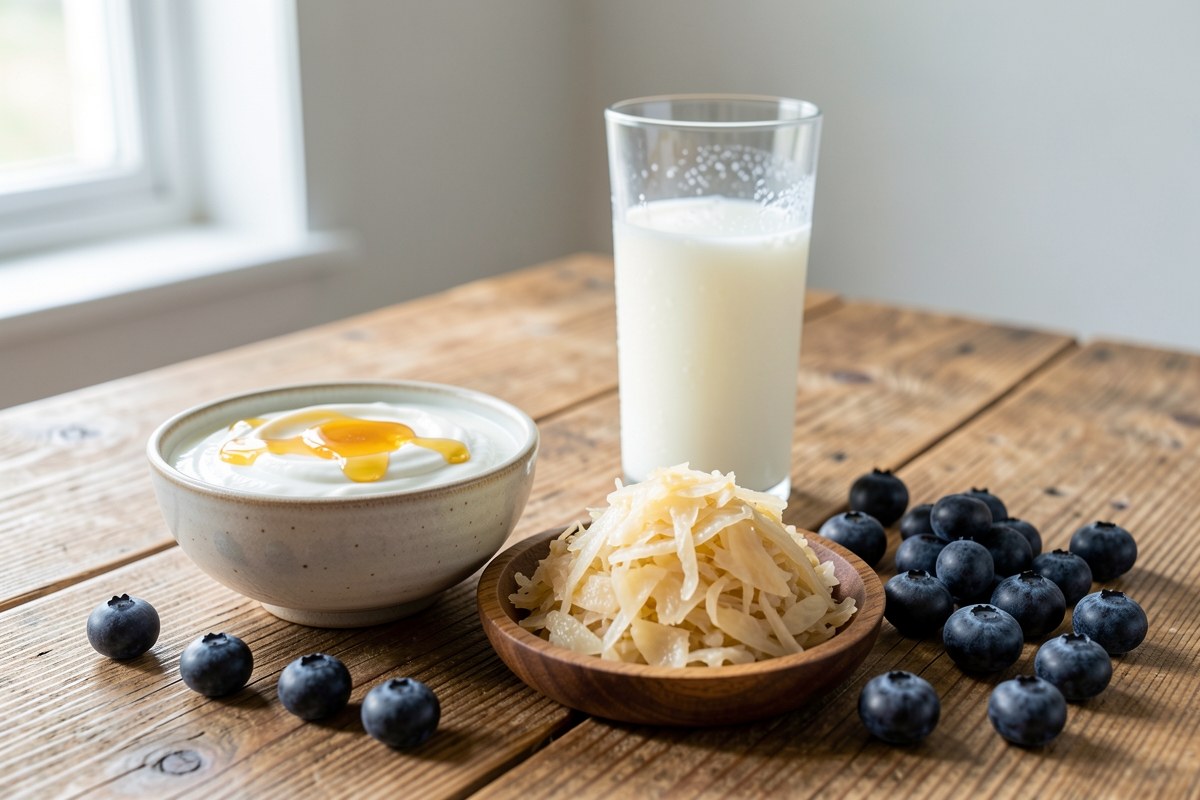
What are probiotics
Probiotics are live microorganisms that, when consumed, can contribute to the balance of bacteria in your digestive tract. These beneficial bacteria are part of the complex community of microbes—your gut microbiome—that influences digestion, immunity, and overall health.
Your gut microbiome thrives on variety, and different probiotic strains can play different roles. This is why many health experts encourage a varied diet that includes foods with live cultures. While the evidence for specific health outcomes is still mixed, a balanced gut microbiome is linked to better overall well-being, and a diet rich in probiotics may help support that diversity.
However, probiotics are not a magic bullet on their own. A dietary pattern that also includes plenty of fiber—from fruits, vegetables, whole grains, and legumes—provides the fuel that beneficial bacteria need to thrive. That is why the best approach is to combine probiotic foods with prebiotic-rich foods.
Sources: Harvard T.H. Chan School of Public Health, ZOE
How to Identify Foods with Live Cultures
A common misconception is that all fermented foods are probiotic. In reality, many fermented products are heat-treated (pasteurized, baked, or pickled in vinegar) to extend shelf life, and that heat kills the live bacteria. If a product has been cooked or pasteurized after fermentation, it may no longer contain beneficial cultures.
The best way to know if a food still has live cultures is to read the label. Look for phrases like “live and active cultures” or “contains live cultures.” For refrigerated items, such as sauerkraut or kimchi, choosing those kept in the refrigerated section rather than shelf-stable jars is also a good rule of thumb.
Keep in mind that even if a fermented food is labeled as containing live cultures, the number of organisms can decline over time. Always check the use-by date and store these products according to the package instructions.
- Look for the phrase “live and active cultures” on packaging.
- Choose refrigerated versions of fermented vegetables over shelf-stable ones.
- Avoid products that have been pasteurized or baked after fermentation, as heat kills beneficial bacteria.
- Check the expiration date and store probiotic foods properly to preserve their cultures.
Sources: Harvard T.H. Chan School of Public Health, GoodRx, ZOE
Yogurt and Kefir
Yogurt is probably the best-known probiotic food. It is typically made by fermenting milk with bacteria such as Lactobacillus and Bifidobacterium. However, not every yogurt contains live cultures—some are heat-treated after fermentation. To get the probiotic benefit, choose products that state “live and active cultures” on the label. Also, be mindful of added sugar; plain yogurt is a healthier choice.
Kefir is a fermented milk beverage that has a thinner consistency than yogurt. It is made by adding kefir grains, which are a mix of bacteria and yeast, to milk. Kefir is known for its diverse range of microorganisms—some sources suggest it may contain more than 50 different species. This makes it a versatile choice for adding probiotics to your diet.
Both yogurt and kefir can be enjoyed on their own or used in smoothies, overnight oats, or salad dressings. They are excellent sources of protein and calcium, making them a convenient way to include live cultures in your meals.
Sources: Arizona Center for Integrative Medicine (University of Arizona), Harvard T.H. Chan School of Public Health, GoodRx
Fermented Vegetables: Sauerkraut and Kimchi
Sauerkraut is finely shredded cabbage that has been fermented by lactic acid bacteria. The key to getting probiotics from sauerkraut is to choose unpasteurized varieties that are refrigerated, as the heat from pasteurization kills the beneficial bacteria. Shelf-stable sauerkraut found in jars is typically pasteurized and will not contain live cultures. Use it as a side dish or a tangy topping for sandwiches, salads, or bowls.
Kimchi is a spicy Korean side dish made from fermented vegetables, usually cabbage and radishes, with a mix of seasonings. It is a rich source of lactic acid bacteria, including a strain named after the dish itself, Lactobacillus kimchii. Kimchi can be added to rice bowls, stir-fries, or enjoyed on its own. Like sauerkraut, it is best to choose refrigerated kimchi to ensure live cultures are present.
Sources: Arizona Center for Integrative Medicine (University of Arizona), Medicana International, GoodRx
Miso, Tempeh, and Natto
These three fermented soybean products are staples in Japanese and Indonesian cuisines, and each offers a unique way to add probiotics to your diet.
Miso is a savory paste made from soybeans fermented with salt and a type of fungus called koji. It is commonly used to make miso soup, but boiling miso will kill the beneficial bacteria. To preserve the probiotics, add miso to soups or sauces only after they have been taken off the heat. Miso also adds a rich umami flavor to marinades and dressings.
Tempeh is a soybean cake that has been fermented by a mold, giving it a firm texture and a nutty taste. It contains lactic acid bacteria and is also an excellent source of plant-based protein. However, high-heat cooking, such as frying or baking at very high temperatures, can reduce its probiotic content. You can still enjoy tempeh as a meat substitute; just be aware that cooking methods may impact the live cultures.
Natto is made from soybeans fermented with Bacillus subtilis. It has a distinctive pungent aroma and a slimy texture, which can be an acquired taste. Natto is a good source of probiotics and is often eaten for breakfast in Japan, typically over rice. It is less common in Western countries but is available in many Asian grocery stores.
Sources: Arizona Center for Integrative Medicine (University of Arizona), GoodRx, ZOE
Other Fermented Foods: Kombucha and Certain Cheeses
Kombucha is a fermented tea beverage that has become popular for its tangy flavor and potential probiotic benefit. However, not all kombucha contains live cultures—some varieties are pasteurized to stop fermentation, which kills the bacteria. To choose a probiotic kombucha, look for raw, unpasteurized options, and also watch for added sugars, as some brands can be high in sugar. Enjoy it as a refreshing drink, but moderation is wise due to its sugar content.
Certain aged cheeses may also contain live probiotic cultures. Cheeses such as Swiss, Gouda, cheddar, Edam, Gruyere, and provolone are listed as possible sources if they have not been heated after aging. While cheese is not always a primary source of probiotics compared to yogurt or kefir, it can still contribute to your overall intake. For maximum benefit, look for cheeses that specify they contain live cultures or are made from unpasteurized milk (though note that unpasteurized cheese carries additional safety considerations).
Serving suggestions
There is no official recommended daily amount of probiotic food that applies to everyone. Instead, experts generally suggest incorporating a variety of probiotic-rich foods into your weekly eating pattern. Including them consistently, alongside fiber-rich prebiotic foods, is a reasonable approach.
Here are some practical ways to include probiotic foods in your meals:
- Start your day with a bowl of plain yogurt topped with fruit and nuts, or drink a glass of kefir.
- Add a spoonful of sauerkraut or kimchi to your lunchtime sandwich or grain bowl.
- Use miso to make a quick miso soup as a side dish, adding the paste after the soup has slightly cooled.
- Enjoy tempeh as a plant-based protein in stir-fries or wraps, keeping the cooking temperature moderate.
- Sip a small glass of kombucha in the afternoon instead of a sugary soda.
If you are new to these foods, introduce them gradually to give your digestive system time to adjust. The goal is to build a sustainable habit that supports your gut health without overdoing any single food.
| Probiotic Food | How to Confirm Live Cultures | Serving Suggestion |
|---|---|---|
| Yogurt | Look for 'live and active cultures' on the label. | Eat plain with fruit and nuts. |
| Kefir | Check for 'live cultures' or choose unpasteurized. | Drink plain or blend into smoothies. |
| Sauerkraut | Select refrigerated, unpasteurized varieties. | Use as a side dish or sandwich topping. |
| Kimchi | Choose refrigerated, unpasteurized kimchi. | Add to rice bowls or stir-fries. |
| Miso | Add to dishes after cooking to preserve cultures. | Use in miso soup or dressings. |
| Tempeh | Contains lactic acid bacteria; avoid high-heat cooking. | Use as a plant-based protein in stir-fries. |
| Kombucha | Select raw, unpasteurized, low-sugar options. | Drink as a beverage. |
Sources: Harvard T.H. Chan School of Public Health, ZOE
Frequently asked questions
Do all fermented foods contain probiotics?
No, not all fermented foods contain probiotics. Many fermented products, such as pickles made with vinegar or shelf-stable sauerkraut, are heat-treated or pasteurized after fermentation, which kills the live bacteria. To get probiotics from fermented foods, look for labels that say “live and active cultures” and choose refrigerated, unpasteurized varieties whenever possible.
Sources: Harvard T.H. Chan School of Public Health, GoodRx, ZOEAre probiotic foods safe to eat daily?
Probiotic foods are generally safe for most healthy adults when consumed regularly. However, people who are immunocompromised or critically ill should talk to their healthcare provider before adding probiotic foods to their diet. It is also important to choose products that have been safely produced and stored.
Sources: Harvard T.H. Chan School of Public Health, Medicana InternationalWhich yogurt has the most probiotics?
Yogurts that contain live and active cultures, typically labeled as such, are the ones with probiotics. The specific strains and amounts can vary between brands. To get the most benefit, choose plain, unsweetened yogurt—added sugar can outweigh the benefits. Some yogurts also list specific strains like Lactobacillus or Bifidobacterium, which are associated with digestive health.
Sources: Arizona Center for Integrative Medicine (University of Arizona), Harvard T.H. Chan School of Public Health, Medicana International, GoodRxCan I get probiotics from non-dairy sources?
Yes, many non-dairy foods contain probiotics. Fermented vegetables like sauerkraut and kimchi are excellent options, as are miso, tempeh, and kombucha (if raw and unpasteurized). Natto, a fermented soybean product, is another non-dairy source. These foods provide lactic acid bacteria or other beneficial strains without any dairy.
Sources: Arizona Center for Integrative Medicine (University of Arizona), GoodRxHow much probiotic food should I eat for gut health?
There is no official recommendation for a specific amount of probiotic food to eat each day. The key is consistency and variety. Rather than focusing on a single food, try to include a range of probiotic foods in your meals throughout the week, such as yogurt, kefir, sauerkraut, and kimchi. Pair them with fiber-rich prebiotic foods like fruits, vegetables, and whole grains to support the growth of beneficial bacteria.
Sources: Harvard T.H. Chan School of Public Health, ZOESources
- Top 5 Probiotic Foods for Gut Health — Arizona Center for Integrative Medicine (University of Arizona)
- Probiotics for Gut Health — Harvard T.H. Chan School of Public Health
- Probiotic Foods List: Foods That Support Gut Health — Medicana International
- 15 Probiotic Foods for Your Gut Health — GoodRx
- The best probiotic foods to include in your diet — ZOE