Why Pair Probiotics and Prebiotics at Lunch and Dinner
Probiotic foods such as yogurt, kefir, sauerkraut, kimchi, tempeh, and certain cheeses introduce live beneficial bacteria into your digestive tract. Prebiotic foods—think garlic, onions, bananas, asparagus, and chicory root—provide nourishment for those beneficial bacteria. Together, they work in complementary ways to help maintain gut health.
Instead of treating probiotics and prebiotics as separate tasks, you can weave both into everyday main meals. A grain bowl topped with sauerkraut offers live cultures plus the fiber from whole grains and vegetables. A stir-fry with tempeh and onions introduces fermented soy and prebiotic alliums in one pan.
Sources: Gut Microbes (PMC), 3 Biotech (PubMed), Mayo Clinic Health System
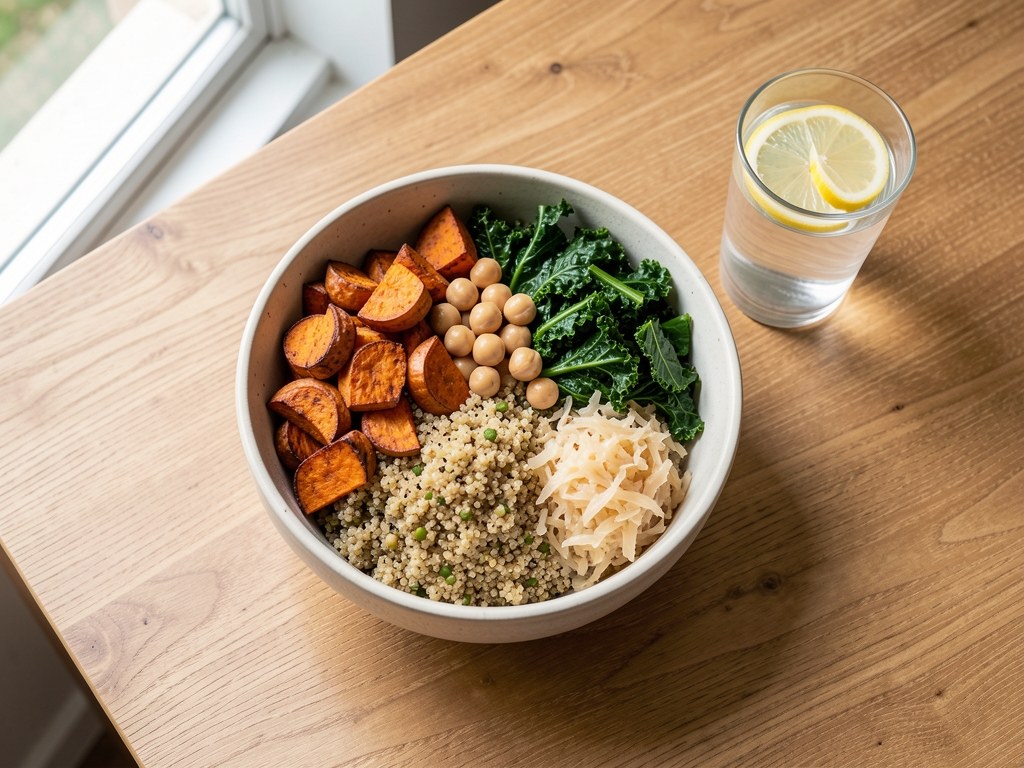
Lunch Ideas: Salads with Fermented Vegetables
A simple way to add fermented foods to lunch is to fold them into a leafy salad. Sauerkraut and kimchi bring tang, crunch, and live bacteria to a base of fresh greens. To build a balanced plate, include a source of protein (chicken, tofu, or beans), some healthy fat from a dressing or avocado, and a serving of complex carbohydrates such as quinoa or roasted sweet potato.
The prebiotic vegetables you add do not have to be complicated. Sliced onions, a few garlicky croutons, or a handful of asparagus tips all deliver fiber that feeds beneficial gut microbes. Keep fermented vegetable portions modest at first—a tablespoon or two—so your digestive system can adjust.
- Try a mixed green salad with roasted chicken, shredded cabbage, and a few spoonfuls of sauerkraut.
- Make a taco-inspired salad with romaine, black beans, corn, and kimchi, dressed with lime and olive oil.
- Add a side of fermented carrots or pickled beets to your usual lunchtime salad.
Sources: Gut Microbes (PMC), Food Science and Biotechnology (PMC), Femme Pharma, Food Revolution Network
Buddha Bowls with Miso Dressing
A buddha bowl is a flexible lunch that pairs a grain, a protein, vegetables, and a flavorful sauce. Miso—a fermented soybean paste—can be whisked into a dressing that adds both savory depth and a source of probiotics. Since some of miso’s beneficial bacteria may be sensitive to high heat, it is best to mix miso into a dressing or drizzle it over the bowl after cooking.
Start with a base like brown rice or quinoa, add roasted vegetables, a protein such as tofu or grilled chicken, and finish with a miso-tahini or miso-ginger dressing. For extra prebiotic fiber, include onions, garlic, or lightly cooked asparagus in the vegetable mix.
Consider this meal idea a flexible template rather than a strict recipe, and adjust it to what you have on hand. A bowl that combines whole grains, fermented miso, and various vegetables supports the goal of eating a diet rich in fiber and fermented foods.
- Grain: cooked quinoa, brown rice, or barley
- Protein: chickpeas, edamame, grilled fish, or roasted chicken
- Vegetables: broccoli, carrots, avocado, red cabbage, onions, garlic
- Dressing: miso paste, lemon juice, olive oil, and a little water to loosen
Sources: Gut Microbes (PMC), GoodRx, Health eCooks, Food Revolution Network
Soups with Prebiotic Vegetables
Soup is a comforting lunch or light dinner, and it is easy to increase its prebiotic content. Onions, garlic, leeks, and asparagus are all sources of prebiotic fiber, so they can provide nourishment for beneficial bacteria. A vegetable soup that starts with a base of sautéed onions and garlic is a simple, flavorful choice.
You can also make a soup with beans or lentils, which contribute fiber, and top it with a spoonful of fermented vegetables after serving. This approach preserves the live cultures, which may otherwise be reduced by high heat if added during cooking.
For a creamy texture without adding cream, puree cooked cauliflower or white beans. Finish the bowl with a swirl of plain yogurt or a spoonful of sauerkraut for an added fermented element.
- Make a lentil soup with onions, celery, carrots, and garlic.
- Roast asparagus and blend it into a smooth soup, then stir in a little probiotic yogurt.
- Add miso to a vegetable broth after the soup has cooled slightly to keep the fermented paste’s beneficial bacteria intact.
Sources: Gut Microbes (PMC), Femme Pharma
Dinner Ideas: Grilled Chicken with Kimchi
A simple dinner featuring grilled chicken and a side of kimchi brings together lean protein and a fermented vegetable that supplies live lactic acid bacteria. Kimchi is traditionally made from napa cabbage and other vegetables, and it adds a spicy, sour flavor that pairs well with mild dishes.
To round out the plate, add a cooked whole grain such as barley or quinoa and a green vegetable like steamed bok choy or broccoli. This combination supplies a source of probiotics from the kimchi, prebiotic fiber from the vegetables, and satisfying protein.
If you prefer, you can use miso as a marinade for the chicken before grilling, then serve the kimchi on the side. Since the kimchi is not cooked, its live cultures remain intact.
- Serve grilled chicken thighs with a generous side of kimchi and steamed brown rice.
- For a low-FODMAP approach, choose a small portion of kimchi and pair it with carrots, zucchini, or other tolerated vegetables.
Sources: Gut Microbes (PMC), Food Science and Biotechnology (PMC), GoodRx
Stir-Fries with Tempeh and Onions
Tempeh is a fermented soybean product that offers plant-based protein plus beneficial bacteria from the fermentation process. When you stir-fry slices of tempeh with onions and other vegetables, you combine a probiotic food with prebiotic-rich ingredients.
Use a high-heat method like stir-frying to cook the tempeh, but keep the heat moderate enough to avoid burning. Onions and garlic can go in first to soften, then add broccoli, bell peppers, or snap peas. Finish with a sauce made from tamari, ginger, and a little rice vinegar, and consider adding a spoonful of kimchi or sauerkraut after cooking for an extra fermented boost.
This dish works well over brown rice or noodles. If you want to keep the tempeh’s probiotic benefits, you can add the tempeh at the end and warm it gently rather than cooking it at high heat for a long time.
For a complete meal that includes prebiotic fiber, serve the stir-fry over a bed of cooked barley or quinoa and top with sliced green onions.
- Base: tempeh, onions, garlic, and your choice of vegetables
- Sauce: tamari, rice vinegar, sesame oil, and fresh ginger
- Garnish: fresh cilantro, sliced scallions, and a few spoonfuls of kimchi or sauerkraut
Sources: Gut Microbes (PMC), Femme Pharma
Hearty Grain Bowls with Sauerkraut
A grain bowl is an easy dinner that lets you layer several gut-friendly components. Start with a cooked grain such as brown rice, farro, or sorghum. Add roasted or raw vegetables, a protein, and a generous spoonful of sauerkraut—the sour, fermented cabbage adds both flavor and live lactic acid bacteria.
The fiber from the whole grain and the vegetables provides prebiotic nourishment, while the sauerkraut supplies probiotics. You can also incorporate other fermented elements, such as a dollop of plain yogurt or a drizzle of miso dressing.
Try a bowl with roasted sweet potato, black beans, sautéed onions, and sauerkraut, or a Mediterranean version with quinoa, chickpeas, roasted peppers, and a spoonful of sauerkraut. The key is to keep the sauerkraut raw and add it just before serving.
This format is highly customizable, making it easy to rotate different vegetables and proteins throughout the week.
- Pick a whole grain base and a source of protein.
- Pile on a variety of vegetables—raw, roasted, or sautéed.
- Top with a fermented food such as sauerkraut, kimchi, or a spoonful of plain yogurt.
- Finish with a simple dressing made from olive oil, lemon juice, and herbs.
Sources: Gut Microbes (PMC), Food Science and Biotechnology (PMC), GoodRx, Food Revolution Network
Tips for Planning Gut-Healthy Lunches and Dinners
Planning ahead can help you include both probiotics and prebiotics in your mid-day and evening meals. The goal is to eat a varied, balanced diet rather than trying to hit a specific target of fermented foods each day.
One approach is to keep a few staple fermented foods in the refrigerator—such as sauerkraut, kimchi, miso, and plain yogurt—so they are easy to add to any meal. On the prebiotic side, stock up on onions, garlic, asparagus, bananas, and whole grains like oats or barley.
If you are new to fermented foods, start with small portions and gradually increase them, as your digestive system may need time to adapt. Some people find that too much too quickly can cause gas or bloating.
You can also batch-cook grains and roasted vegetables ahead of time to make assembly faster. When reheating meals that contain fermented foods, add the fermented component after reheating so that any live bacteria are not exposed to high heat.
Notice how different combinations feel for you; everyone’s gut is unique. If you have a medical condition that affects your diet, talk to a healthcare provider before making significant changes.
- Keep a container of sauerkraut or kimchi in the fridge and add a spoonful to lunches and dinners.
- Prepare a big batch of cooked grains and roast several vegetables at the start of the week.
- Use miso in dressings and marinades rather than boiling it in soups.
- Pair a fermented food with a prebiotic food at each meal, such as kimchi with a bowl of barley or yogurt on a salad with asparagus.
Sources: Gut Microbes (PMC), Food Science and Biotechnology (PMC), Mayo Clinic Health System, Food Revolution Network
Frequently asked questions
Can I eat red meat in moderation?
Yes, you can include red meat in moderation as part of a diet that emphasizes a variety of plant foods and fermented items. Pair a small portion of red meat with plenty of vegetables and a fermented side, like sauerkraut or kimchi, to support overall dietary variety. However, current dietary guidance generally encourages leaning on plant-based proteins and fish for many meals, while limiting red meat intake.
Sources: Gut Microbes (PMC)What are good vegetarian dinner options?
Vegetarian dinner ideas include a tempeh stir-fry with onions and broccoli, a grain bowl with chickpeas and sauerkraut, or a miso-based soup with tofu and vegetables. Tempeh and miso provide probiotics, while chickpeas, onions, and garlic supply prebiotic fiber. You can also consider a hearty lentil soup topped with a spoonful of yogurt or kimchi.
Sources: Gut Microbes (PMC), Food Science and Biotechnology (PMC), Femme Pharma, Food Revolution NetworkHow can I add more prebiotics to my main meals?
Include prebiotic-rich vegetables and grains in your main dishes. Sauté onions and garlic as a base for soups, stir-fries, and grain bowls. Add asparagus, leeks, or chicory root when available, and choose whole grains like oats, barley, or whole wheat. These foods contain fibers that feed beneficial gut bacteria.
Sources: Gut Microbes (PMC), Mayo Clinic Health SystemAre leftovers safe for probiotics?
Leftovers can still contain some beneficial bacteria, but heating them to high temperatures will kill live cultures. If you plan to reheat a meal, store the fermented component separately and add it after reheating. For example, warm leftover grain and chicken, then top with cold sauerkraut or kimchi. Always follow general food safety practices: refrigerate leftovers promptly and reheat to a safe temperature.
Sources: Food Science and Biotechnology (PMC), GoodRxSources
- Elucidating the role of diet in maintaining gut health to reduce the risk of obesity, cardiovascular and other age-related inflammatory diseases: recent challenges and future recommendations — Gut Microbes (PMC)
- Plant-based probiotic foods: current state and future trends — Food Science and Biotechnology (PMC)
- Unveiling probiotic and prebiotic functional dairy foods: a health beneficial outlook — 3 Biotech (PubMed)
- Easy Guide: Prebiotic and Probiotic Foods for Gut Health — Femme Pharma
- The 15 Best Probiotic Foods for Gut Health — GoodRx
- Gut health: prebiotics and probiotics — Mayo Clinic Health System
- 7 Best Gut Healthy Foods & 13 Easy Recipes | Health eCooks — Health eCooks
- Probiotic Recipes and Foods to Better Your Digestive Health — Food Revolution Network