Why Fiber Is Essential for Gut Health
Fiber is a type of carbohydrate that your body cannot digest. Instead of being broken down and absorbed, it travels through your digestive tract, where it plays several crucial roles. A diet rich in fiber supports regular bowel movements, feeds the beneficial bacteria in your gut, and is linked to a lower risk of many chronic diseases.
Many Americans do not get enough fiber. Evidence from clinical guidelines indicates that most adults consume only about 17 grams of fiber daily, roughly half the recommended amount. This shortfall is concerning because fiber is not just about preventing constipation; it is a cornerstone of overall health, influencing everything from blood sugar control to inflammation.
- Promotes regularity by adding bulk to stool and softening it.
- Feeds beneficial gut bacteria, which produce short-chain fatty acids (SCFAs) with anti-inflammatory effects.
- Helps maintain a healthy weight by increasing satiety.
- Supports heart health by lowering cholesterol and blood pressure.
Sources: NCBI Bookshelf, Frontiers in Nutrition, Molecules
Recommended Daily Fiber Intake for Adults (US)
The adequate intake (AI) for dietary fiber, as defined by the National Academies of Sciences, Engineering, and Medicine and referenced in clinical guidelines, is 25 grams per day for adult women and 38 grams per day for adult men. An alternative way to express this is 14 grams of fiber for every 1,000 calories you consume.
These recommendations are general for adults.
- Women: 25 g/day
- Men: 38 g/day
- Alternative: 14 g per 1,000 kcal
Soluble and insoluble fiber and their roles
Fiber is broadly classified into two types based on how it behaves in water: soluble and insoluble. Both are important for gut health, though they work in different ways.
Soluble fiber dissolves in water to form a gel-like substance in your digestive tract. This gel slows gastric emptying, which helps regulate blood sugar levels after meals and can also bind to cholesterol, helping to lower LDL (bad) cholesterol. Importantly, soluble fiber is fermented by gut bacteria, producing short-chain fatty acids (SCFAs) that have anti-inflammatory effects and nourish the cells lining your colon.
Insoluble fiber does not dissolve in water. It adds bulk to your stool and helps move food through your digestive system more quickly, promoting regular bowel movements and preventing constipation. Insoluble fiber also provides a substrate for some fermentation, though to a lesser extent than soluble fiber.
A healthy diet should include both types of fiber. Some preliminary research suggests that a 1:1 ratio of insoluble to soluble fiber may be particularly effective for relieving constipation, but more research is needed to confirm this.
Examples of foods rich in soluble fiber include oats, barley, fruits like pears and apples, vegetables like broccoli and carrots, and legumes like beans and lentils. Insoluble fiber is abundant in whole grains, wheat bran, nuts, and the skins of fruits and vegetables.
- Soluble fiber: forms a gel, slows digestion, helps lower cholesterol and regulate blood sugar, and fuels gut bacteria.
- Insoluble fiber: adds bulk, speeds transit time, and helps prevent constipation.
- Many plant foods contain both types, so focusing on a variety of whole plant foods is the best strategy.
Sources: NCBI Bookshelf, Frontiers in Nutrition, Journal of the Academy of Nutrition and Dietetics, Molecules, Food Chemistry: X
High-Fiber Foods to Include
To meet your daily fiber goal, it is helpful to know which foods are fiber powerhouses.
Soluble fiber is found in oats, barley, fruits like pears and apples, vegetables like broccoli, and legumes like beans. Insoluble fiber is concentrated in whole grains, particularly wheat bran, and also in many other plant foods.
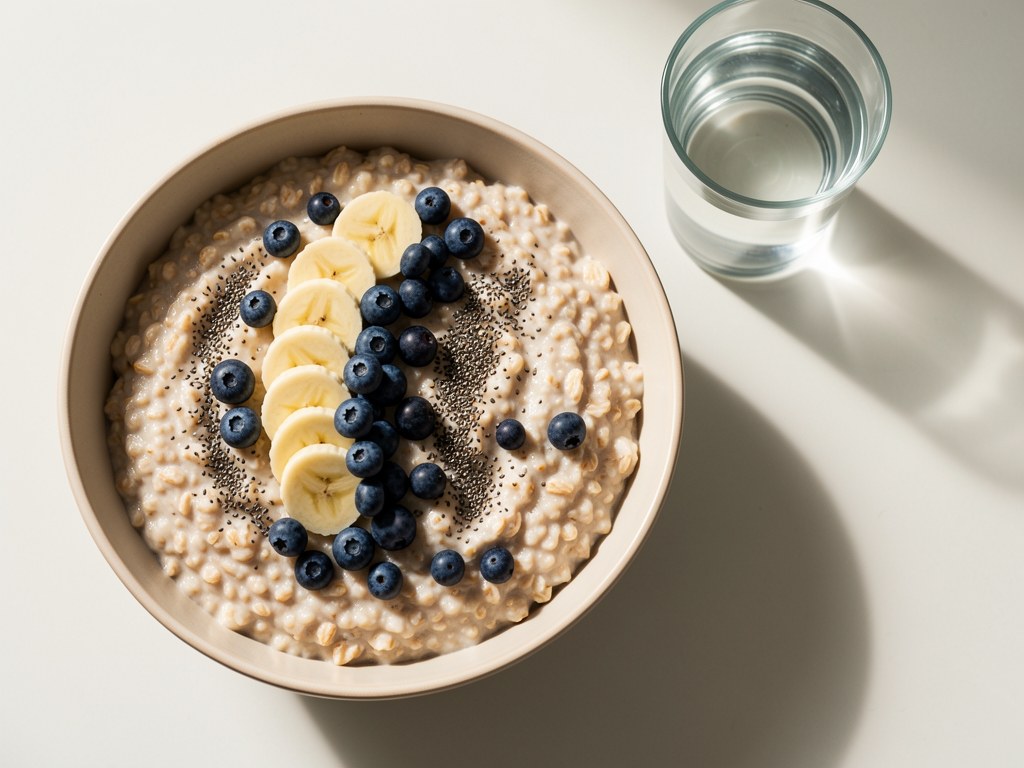
A practical approach is to include a variety of these foods throughout your day. For breakfast, choose oatmeal made with rolled oats (soluble fiber) or a bran cereal (insoluble fiber). For snacks, reach for fruit like an apple or a handful of almonds. For main meals, incorporate beans, lentils, barley, or quinoa. Remember to include plenty of vegetables in your meals.
- Legumes: lentils, black beans, chickpeas
- Whole grains: oats, barley, quinoa, whole wheat, brown rice
- Fruits: pears, apples, berries, oranges
- Vegetables: broccoli, Brussels sprouts, carrots, leafy greens
- Nuts and seeds: almonds, chia seeds, flaxseeds
Sources: NCBI Bookshelf, Food Chemistry: X, Journal of the Academy of Nutrition and Dietetics
How to Increase Fiber Gradually
If you are not used to eating a lot of fiber, increasing your intake too quickly can cause bloating, gas, and cramping. Your gut bacteria and digestive tract need time to adapt. A recommended strategy is to increase your fiber intake slowly, adding 2–3 grams every few days until you reach your target.
For example, if you currently eat about 17 grams a day and want to reach 25 grams, you might add 2–3 grams (about half a cup of cooked vegetables or a piece of fruit) every few days. Over the course of a few weeks, you can gradually reach your goal without significant discomfort.
It is also essential to drink plenty of fluids when you increase fiber. Adequate hydration helps fiber move through your intestines and prevents constipation. Without enough water, fiber can actually worsen constipation.
Here is a sample gradual plan to illustrate how you might increase your fiber over a few weeks. This is not a prescription, but rather an example to show how to apply the principle of gradual increase.
- Start with a baseline of your current typical fiber intake (many Americans are around 17 g/day).
- Every few days, add 2–3 grams of fiber to your diet.
- Choose fiber-rich snacks like fruit or nuts.
- Incorporate one high-fiber food into each meal.
- Keep a simple log to track your intake and adjust as needed.
- Drink extra water as you increase fiber.
- Be patient and listen to your body.
- Week 1: Add a piece of fruit (about 2-3 g) to your lunch each day. Keep the rest of your diet as usual.
- Week 2: Add a serving of vegetables (e.g., half a cup of broccoli, about 2-3 g) to your dinner.
- Week 3: Swap your breakfast cereal for oatmeal (about 2-3 g extra) or add a slice of whole-wheat toast.
- Week 4: Incorporate a half-cup serving of beans or lentils (6–8 g) into one meal, and adjust other meals to stay within your target.
Sources: NCBI Bookshelf
Common Mistakes and How to Avoid Them
Many people inadvertently sabotage their fiber goals. Here are some common mistakes and practical ways to steer clear of them.
Mistake 1: Increasing fiber too quickly. This is the most frequent cause of bloating and discomfort. The fix is to follow the gradual increase strategy described above.
Mistake 2: Not drinking enough water. Fiber needs water to do its job effectively. Without adequate fluids, you may experience constipation instead of relief. Aim to drink more when you add fiber to your diet.
Mistake 3: Relying on fiber supplements alone. While fiber supplements can be helpful in some situations, they are not a substitute for whole foods. Whole foods provide a complex mix of fiber types, vitamins, minerals, and phytochemicals that work together for your health. If you consider supplements, it is wise to discuss this with your healthcare provider.
Mistake 4: Neglecting variety. Eating only one or two high-fiber foods can become monotonous and may not provide the full range of benefits. Try to include a variety of soluble and insoluble fiber from different sources.
Mistake 5: Ignoring your body's signals. If you experience severe pain or persistent digestive issues, it is important to consult a healthcare provider.
- Do not double your fiber overnight; increase gradually.
- Drink more water than usual, especially as you add fiber.
- Choose whole foods over supplements for most of your fiber intake.
- Include a mix of soluble and insoluble fiber-rich foods.
- If you have a medical condition, talk to your doctor before making major dietary changes.
Sources: NCBI Bookshelf, Journal of the Academy of Nutrition and Dietetics
Monitoring Progress and Adjusting
As you increase your fiber, it is important to pay attention to how your body responds. Regularity is a good indicator. If you notice increased bloating or gas, you may be increasing too fast or not drinking enough water.
Your bowel habits can serve as a progress check. Ideally, you should have comfortable, regular bowel movements. If you experience constipation or diarrhea, adjust your intake and hydration accordingly.
If you experience persistent discomfort, consider pausing your increase for a few days or reducing your fiber slightly until symptoms subside. Then resume with smaller increments. This adjusting process is key to finding your own comfortable level.
Keep in mind that everyone is different, and your fiber needs may vary based on your age, activity level, and health status. Use the general recommendations as a starting point, and fine-tune your intake based on how you feel.
If you have an existing digestive condition, such as irritable bowel syndrome (IBS) or inflammatory bowel disease (IBD), consult a healthcare provider before making major changes to your fiber intake.
- Track your fiber intake for a few days to see where you stand.
- Note how you feel after meals and overall.
- Adjust your pace of increase if you experience discomfort.
- Seek professional guidance if you have health concerns.
Sources: NCBI Bookshelf
Frequently asked questions
How much fiber should a woman/man over 50 get?
The general adequate intake for adults is 25 g/day for women and 38 g/day for men. Since needs may change with age, it is best to consult a healthcare provider for personalized advice.
Sources: NCBI BookshelfIs 50 grams of fiber a day too much?
For most adults, 50 grams a day is higher than the recommended 38 g for men and 25 g for women. While some people may tolerate more, a sudden increase to this level is likely to cause bloating and discomfort. It's safer to aim for the recommended amounts and increase gradually.
Sources: NCBI BookshelfWhat breakfast foods are high in fiber?
Oatmeal (made with rolled or steel-cut oats) is a great source of soluble fiber. Whole-grain cereals with wheat bran are also high in insoluble fiber. You can add fruit like berries or sliced pear, and seeds like chia or flaxseeds to boost fiber further.
Sources: NCBI Bookshelf, Food Chemistry: XCan fiber supplements replace whole foods?
Fiber supplements can provide concentrated fiber, but they are not a replacement for whole foods. Whole foods offer a variety of fiber types, vitamins, minerals, and other nutrients that supplements do not. The best approach is to get most of your fiber from a diverse diet of plant foods.
Sources: Journal of the Academy of Nutrition and DieteticsWhat causes bloating when increasing fiber?
Bloating occurs when you increase fiber too quickly, leading to gas production as your gut bacteria ferment the undigested fiber before your digestive system has adapted. This is normal if it is temporary. To reduce bloating, increase fiber gradually (2–3 grams every few days) and drink plenty of water.
Sources: NCBI BookshelfSources
- The Role of Dietary Fiber in Health Promotion and Disease Prevention: A Practical Guide for Clinicians — NCBI Bookshelf
- Dietary fiber influence on overall health, with an emphasis on CVD, diabetes, obesity, colon cancer, and inflammation — Frontiers in Nutrition
- Soluble and insoluble dietary fiber at different ratios: Hydration characteristics, rheological properties, and ameliorative effects on constipation — Food Chemistry: X
- Understanding the Physics of Functional Fibers in the Gastrointestinal Tract: An Evidence-Based Approach to Resolving Enduring Misconceptions about Insoluble and Soluble Fiber. — Journal of the Academy of Nutrition and Dietetics
- Soluble Dietary Fiber, One of the Most Important Nutrients for the Gut Microbiota — Molecules
- Microbiome, Breastfeeding and Public Health Policy in the United States: The Case for Dietary Fiber — Nutrition and Metabolic Insights